Forage particle size recommendations that boost cow comfort

Posted on August 22, 2023 in Forage Foundations
By Rick Grant, William H. Miner Agricultural Research Institute | Forage quality is an overlooked component of cow comfort. Forage particle size, NDF degradability, fragility and dietary forage percentage must allow the cow to consume feed within 3 to 5 hours per day. Too much forage fiber, poorly digested and/or coarsely chopped forage will extend eating time beyond 5 hours per day and probably limit dry matter intake (DMI).

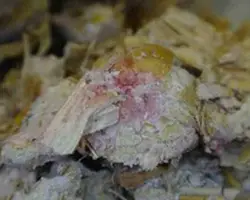
What is that mold in my forage?

Posted on August 22, 2023 in Forage Foundations
By Erin Schwandt, Ph.D., and Paige Gott, Ph.D., dsm-firmenich | The presence of mold on grains and feed ingredients has been shown to negatively impact the nutritional value, impacting energy, vitamin and amino acid digestibility. Mold also can reduce feed palatability.

Crop insurance coverage options

Posted on August 22, 2023 in Forage Foundations
By Jessica Sarbacker, Lake Ridge Bank | You have different policy options to consider when looking to cover your established crops. Each of these options covers different things and has different advantages and disadvantages.

Silage pH: How low is low enough?

Posted on June 1, 2023 in Forage Foundations
By Cody McCary and Michelle Chang-Der Bedrosian, Ph.D., | Butyric fermentations occur in silages that are wet and have a high pH, which creates the ideal growth environment for Clostridia. A low pH is our best tool to combat clostridial fermentations, and the faster the pH can decrease the better.

Manage feed to reduce risk of milk fat depression

Posted on June 1, 2023 in Forage Foundations
By Stacy Nichols, Vita Plus | As we enter the summer months, we face a higher risk of milk fat depression caused by several factors.  One of those factors can be the increased availability of starch and corn oil in well-fermented corn silage and high moisture corn.

Trial shows delayed sealing’s negative impact on forage quality

Posted on June 1, 2023 in Forage Foundations
By Michelle Chang-Der Bedrosian, Ph.D., Vita Plus | The initial phase of making silage is the aerobic phase and it is characterized by the presence of oxygen.  The aerobic phase begins when the plant is cut in the field and continues until the silo is sealed (either the plastic is laid on top of the silo or the bag silo is sealed) and oxygen is consumed by the upfront fermentation. 

Are you making the most of your acres?

Posted on May 31, 2023 in Forage Foundations
By Cody McCary, Vita Plus | Maximizing the forage production from your available land base is pivotal because forage availability and quality can have immense impacts on your purchased feed and ration costs. Forage production efficiency can be best evaluated by determining if the gap between agronomic decisions and the nutritional needs of your dairy herd is bridged.

Cover your ash

Posted on May 12, 2023 in Forage Foundations
By Luke Daninger, Ag Partners Coop | As we approach warmer temperatures and alfalfa greens up throughout the countryside, it is good to think about a key factor in alfalfa production: minimizing ash content during harvest. Main concerns of high ash content in forage include the fact that it has no energy value and that elevated soil contamination could potentially result in Clostidria being found in the silage.

Less spoilage. Less shrink. MORE FEED FOR YOUR HERD.

Posted on April 19, 2023 in Forage Foundations
One strategy to control costs on your dairy is to retain of much of your homegrown forages - and the nutrients they contain - as possible.  Choosing the right inoculant and oxygen barrier plastic will help you limit dry matter (DM) loss and spoilage.  

7 things to think about when you get into new-crop corn silage

Posted on February 21, 2023 in Forage Foundations
By Keith Lesmeister, Ph.D., Vita Plus dairy specialist and Michelle Chang-Der Bedrosian, Ph.D., Vita Plus forage specialist | The silo was sealed well, the applicator was winterized, the chopper was cleaned and put away, and hopefully, the harvest crew finally caught up on some much-needed sleep.  Temperatures dropped and, hopefully, so did the silage pH.  Now it’s time to start feeding that corn silage.

Plant density for silage production

Posted on February 21, 2023 in Forage Foundations
By Luiz Ferraretto, Ph.D., University of Wisconsin-Madison | Forage needs vary vastly within and among dairies across years.  Implementation of practices targeting greater yields is key; however, finding the sweet spot between yield and nutritive value is no simple task, especially when producing silage with high fiber digestibility.

Right-sizing your feed pad

Posted on February 21, 2023 in Forage Foundations
By Jon Rasmussen, Vita Plus | While farms may “break the rules” of forage storage every now and then, the goal should always be to SAFELY store forages with nearly zero oxygen exposure.  If you find yourself frequently breaking the rules, it might be time to resize your feed pad.  Following are four rules to help you in the planning process.

Forage fragility impacts on ration fiber

Posted on February 21, 2023 in Forage Foundations
By Kassidy Buse, University of Nebraska | The quality and characteristics of forages can have direct impact on milk production and profits.  We typically focus on characteristics such as starch content, protein content and NDF digestibility as we include forages in rations.  But as the attributes of fiber and its fractions have continued to be explored, forage fragility has emerged as an area of interest.

Inoculants with L. hilgardii provide more flexibility in feedout timing

Posted on February 21, 2023 in Forage Foundations
By Renato Schmidt, Ph.D., Lallemand Animal Nutrition | Quality forage inoculants can be used to control the fermentation and quality of forages, as well as enhance the overall value at feedout. A newly available inoculant offers flexibility in feedout by allowing a silage to be fed as soon as 15 days post-ensiling.

Get the most from your forage with Crop-N-Rich silage inoculants

Posted on November 23, 2022 in Forage Foundations
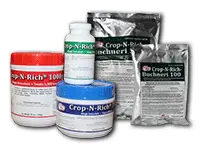
Contact your consultant to book today! Vita Plus Crop-N-Rich inoculants are pure, effective bacterial inoculants that offer unmatched ease of use and are backed with immense research.

Crop selection: Ask the cow what she needs

Posted on November 21, 2022 in Forage Foundations
By Dr. Zach Sawall | We often focus on growing crops to maximize tonnage, and we figure out how to deal with that feed once it’s in the bunk. A more economical approach is to look at what the cow needs and focus on growing forage to meet those needs.